
| ||
| ||
|


As the second lecture in the David Schroeder Music & Culture Series, Dr. Fast���s visit to AV整氈窒 last week was something of a homecoming: she was a Killam post-doctoral fellow in music earlier in her studies. The author of several notable works in popular music studies ��� perhaps most famously 2001���s In the Houses of the Holy: Led Zeppelin and the Power of Rock Music ��� she used the occasion to present a new paper exploring how Michael Jackson operated as a "boundary creature": ���blurring the lines between male and female, child and adult, black and white.���
Hence, her use of the word ���queer��� ��� not necessarily in a purely sexual sense, but as something that lives at the loose ends, or by the definition of David Halperin, ���whatever is at odds with the normal.��� Dr. Fast argues that one of Jackson���s most interesting confrontations with normalcy is musical, in his embrace and reworking of genres like heavy metal that are generally associated with masculinity and heteronormativity.
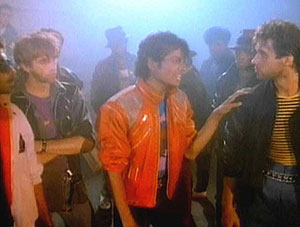
A good deal of her case study focused on the famous video for Beat It, which features two rival street gangs facing off before a didactic Jackson intervenes and leads everyone to cooperate through dance. Though obviously inspired by the film West Side Story, the dancing in that film is used to reinforce a traditional idea of masculinity. Instead, Beat It subverts its metal riffs and Eddie Van Halen guitar solo with its lyric ��� ���advising retreat in the face of adversary,��� as Dr. Fast points out ��� and with its dance sequence. Rather traditional rock gestures, she argues, ���the dance focuses on the full-body wave, counter to the solid masculinity of hard rock.��� She also showed performances of the song on-tour as Jackson���s female guitarist, Jennifer Batten, reinterpreted the solo and further complicated the metal narratives Jackson was playing with.
The David Schroeder Music & Culture Series kicked off in October with a presentation by its namesake, who retired from the Department of Music in December after almost 30 years as a faculty member. Dr. Fast, who was a student during Dr. Schroeder���s time on the faculty, opened her remarks stating: ���I���m quite honoured to be doing a talk under that rubric.���
Beat ItThey told him don't you ever come around here |